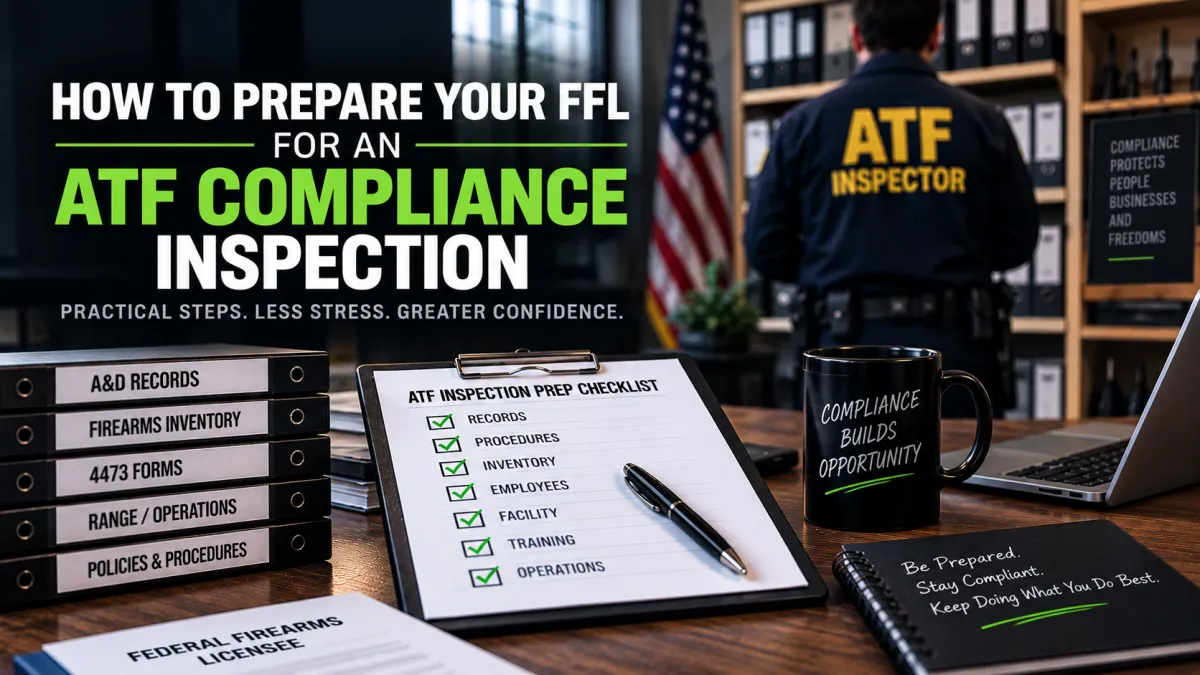
How to Prepare Your FFL for an ATF Compliance Inspection
FFL Compliance & ATF, ATF Inspection Preparation
An ATF compliance inspection should never be the first time your Federal Firearms Licensee (FFL) business takes a hard look at its own records, procedures, and day‑to‑day operations. Effective FFL compliance is built into how you run the business, not something you scramble to assemble after an Industry Operations Investigator (IOI) calls. This article walks through practical ways to prepare your FFL for an ATF compliance inspection and where experienced firearms‑industry consultants can help you get there efficiently.
1. Understand the Purpose of Compliance Preparation
Preparing for an ATF compliance inspection starts with understanding that compliance should be part of your normal business operations. The goal is to maintain accurate records, consistent procedures, and trained employees so your business is prepared to respond professionally when its compliance practices are reviewed.
Preparing for an ATF compliance inspection is not just about “passing” a one‑time review. It is about:
Protecting your FFL business by reducing avoidable errors and risk
Building consistent firearms compliance habits into daily operations
Giving your employees clear, repeatable procedures they can follow under pressure
When you treat ATF inspection preparation as part of normal business management, you gain better control over your inventory, records, and customer interactions, regardless of when the next FFL inspection occurs.
2. Keep Required Records Organized and Accessible
Organized and accurate recordkeeping is a fundamental part of maintaining a compliant FFL operation. Your records should be maintained consistently and in a way that allows required information to be located efficiently when needed. Review your current procedures against applicable ATF requirements and current guidance rather than waiting until an inspection is approaching.
Practical steps for your FFL business include:
Keeping acquisition and disposition records filed in a consistent, logical order (by date, by firearm type, or by another clearly documented method)
Storing completed Form 4473s and related documents in a way that allows quick retrieval for a specific transaction, while following current ATF guidance on retention and storage
Maintaining separate, clearly labeled files for multiple sale reports and other required notifications
3. Review Internal Recordkeeping Procedures, Not Just the Paper
A stack of complete forms is not enough. For strong firearms compliance, your FFL needs clear, written procedures describing how those forms are created, checked, and stored. Clear procedures help employees perform compliance tasks consistently instead of relying on memory or informal practices at the gun counter.
Walk through your recordkeeping step‑by‑step:
How is each firearm entered into your acquisition records when it arrives?
Who is responsible for verifying serial numbers, manufacturer information, and model details?
What is the standard process for completing and reviewing Form 4473 before a transfer?
Documenting those answers makes it easier to train new employees and demonstrate to an IOI that your FFL has a defined process for FFL compliance, not just a pile of paperwork that “usually gets done.”
4. Look for Recurring Errors Before They Become Larger Problems
Most FFLs make occasional mistakes. The real risk comes from recurring errors that indicate a broken process. During internal reviews, look for patterns rather than isolated issues. For example:
Are the same Form 4473 fields frequently incomplete or corrected after the fact?
Do certain employees consistently record dispositions differently than others?
Are inventory discrepancies concentrated in particular categories or time periods?
When you identify a recurring issue, fix the underlying procedure, not just the individual record. That might mean adding a second‑person review, changing how you explain forms to customers, or adjusting how you reconcile inventory against your A&D book. If you are unsure how to correct a pattern, this is a practical point to seek guidance from a knowledgeable FFL compliance consultant or legal professional familiar with firearms regulations in your jurisdiction.
5. Make Sure Employees Truly Understand the Procedures
Many FFLs rely on one “compliance person” while front‑line staff focus on sales or range operations. During an ATF inspection, however, IOIs may speak with the people who actually handle firearms transfers and records. Your procedures only work if employees understand and follow them consistently, even when the store is busy or the phone is ringing.
Provide role‑specific training on FFL compliance tasks, not just a one‑time overview during hiring.
Use simple checklists or job aids near the counter for steps that are easy to overlook under pressure.
Encourage employees to ask questions when they are unsure, rather than “guessing” through a transaction.
6. Review Business Processes, Not Just Paperwork
ATF inspections look at how your FFL business operates, not only what is in your file cabinets. When you review your operation, step back and look at the entire flow:
How do firearms move from delivery to storage, display, sale, and final disposition in your records?
Where are handoffs between employees most likely to create gaps or confusion?
Are your security practices, staffing procedures, and other operational processes being reviewed regularly for potential compliance or operational gaps?
Follow a firearm or transaction through your normal business process from start to finish and identify points where confusion, inconsistent procedures, or employee handoffs could create problems. Then look for practical ways to make the correct process clear and repeatable for your staff.
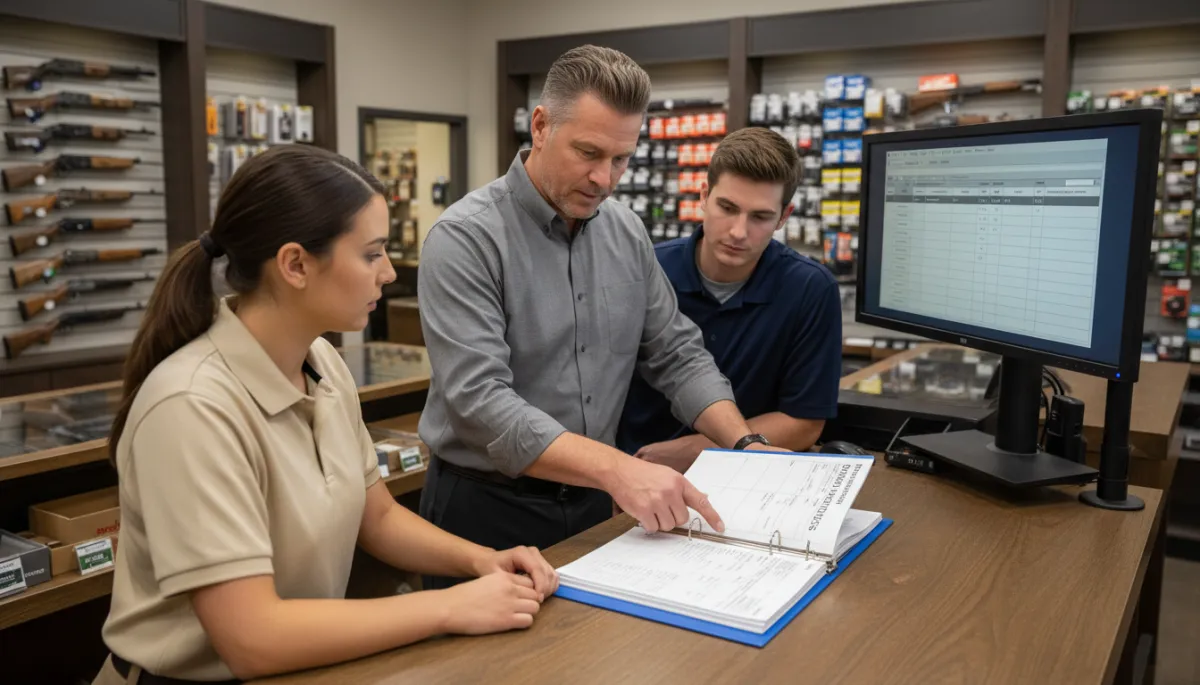
Regularly walking through real transactions helps uncover process gaps before an ATF inspection.
7. Maintain Organized Documentation That Tells a Clear Story
As part of inspection preparation, organize your records and supporting documentation so they can be reviewed efficiently and understood clearly. A well-organized system also makes it easier for your own employees to follow established procedures and locate important information when needed.
Keep a concise “compliance binder” or digital folder with your key written procedures, training records, and notes from prior internal reviews.
Store correspondence with ATF (such as prior inspection letters or clarifications) in a dedicated location so you can reference them quickly if needed.
Be careful not to over‑document in ways that create confusion or conflict with current ATF guidance. If you are unsure whether a particular policy or retention practice is still appropriate under recent rule changes or proposed reforms, confirm with ATF resources or consult a qualified professional before locking it into your procedures.
8. Conduct Periodic Internal Compliance Reviews
Waiting for ATF to identify problems is not a sustainable strategy. Instead, schedule regular internal reviews of your FFL compliance posture. The frequency and depth will depend on your license type, transaction volume, and staffing, but even smaller FFLs benefit from a structured review schedule.
Spot‑check a sample of recent transactions from acquisition through disposition and verify that every step is documented correctly.
Reconcile physical inventory against your A&D records and investigate any discrepancies immediately.
Review recent ATF communications and rulemaking activity to see whether any changes might affect your procedures going forward.
💡 Pro Tip: Treat internal compliance reviews as routine business maintenance rather than something you do only when an inspection is approaching. Consistent reviews can help identify process gaps and recurring errors earlier.
9. Use Mock Inspections or Outside Compliance Reviews
It can be difficult to see your own blind spots. A mock ATF inspection or third‑party FFL compliance audit can provide an objective view of how your business would look to an IOI. This is especially valuable if you have grown quickly, added locations, or changed business models (for example, adding gunsmithing or manufacturing to an existing retail license).
An experienced firearms‑industry consultant can:
Walk your team through a realistic ATF inspection scenario from entry to exit interview
Identify process gaps and recurring recordkeeping issues that may not be obvious internally
Help prioritize remediation steps based on risk and operational impact
This kind of preparation does not replace legal advice where needed, and it does not guarantee any particular inspection outcome. It does, however, give your FFL business a clearer picture of where it stands and what to fix before ATF arrives.
10. What to Do When an ATF Inspection Is Scheduled or Initiated
Not every ATF compliance inspection follows the same sequence, and specific steps can vary by region, license type, and current ATF policies. However, when you learn that an inspection is coming—or when IOIs arrive at your premises—there are some practical actions most FFLs can take:
Designate a primary point of contact who will interact with the IOI and coordinate document retrieval.
Ensure your required records, license, and key documents are organized and ready to present in a professional workspace.
Make sure employees understand your established procedures and know who within the business should handle questions or requests they are unsure about.
If you have questions about your rights or obligations during an inspection, consult with qualified legal counsel familiar with firearms law in your jurisdiction. Do not rely on assumptions or informal advice when the details could depend on current ATF guidance, federal law, state law, or your specific license type.
11. Why Ongoing Compliance Beats Last‑Minute Preparation
Trying to “clean up” years of records and habits in the days before an FFL inspection is stressful and rarely effective. It can also lead to rushed changes that introduce new errors. Ongoing ATF compliance, by contrast, spreads the workload out and makes inspections far less disruptive to your business.
Employees become comfortable with compliance tasks because they perform them correctly every day, not just when ATF is expected.
Inventory and record discrepancies are caught early, when they are easier to understand and resolve.
Adjustments to new ATF rules or guidance can be made gradually, rather than in a single high‑pressure sprint.
In short, ongoing compliance preparation is more sustainable and less disruptive than trying to correct years of records, procedures, and habits immediately before an inspection.
12. When to Involve an Experienced FFL Compliance Consultant
Not every FFL needs outside help for every issue. However, there are clear situations where working with an experienced firearms‑industry consultant can add significant value:
You are opening a new FFL or expanding into manufacturing, gunsmithing, or distribution and want your procedures set up correctly from the start.
You have identified recurring errors or inventory issues and need help diagnosing root causes and practical fixes.
You want a realistic mock inspection or outside FFL compliance audit so you can correct issues before ATF visits.
FFL Consultants focuses specifically on supporting Federal Firearms Licensees with consulting, compliance support, training, operational guidance, inspection preparation, and mock inspections. While no consultant can change the law or guarantee outcomes, the right partner can help you translate regulatory expectations into workable processes that fit your actual business environment.
FFL Compliance Inspection Preparation Checklist
This checklist is a practical starting point, not a complete legal or regulatory list. Always confirm specific requirements against current ATF guidance, applicable law, and professional advice where needed.
Records & Documentation
Acquisition and disposition records are complete, legible, and consistently organized.
Form 4473s are stored in an orderly system that allows quick retrieval.
Multiple sale and other required reports are filed and accessible.
Procedures & Training
Written procedures exist for key compliance tasks (receiving, transfers, inventory, corrections).
Employees handling transfers have been trained on current procedures and know where to ask questions.
Inventory & Operations
Recent inventory reconciliations have been completed, and discrepancies investigated and documented.
Firearms storage, security practices, and operational procedures are reviewed regularly for potential gaps.
Business processes for receiving, displaying, and transferring firearms are clearly understood by staff.
Internal & External Reviews
Internal spot checks of recent transactions are performed on a regular schedule.
Recurring errors have been identified and addressed at the process level.
Consideration has been given to a mock inspection or outside compliance review, especially after major business changes.
Inspection Readiness
A primary point of contact is designated for ATF inspections.
A clean, organized workspace is available for IOIs to review records.
Key documents, prior inspection letters, and relevant correspondence are centrally organized.
Compliance Preparation as an Ongoing Business Process
Preparing your FFL for an ATF compliance inspection is not a one‑time project. It is an ongoing business process that touches inventory, staffing, training, and customer interactions every day. When you build strong FFL compliance habits into your normal operations, inspections become another professional interaction with a regulator, not a crisis event that threatens your ability to operate.
If your FFL wants help reviewing compliance procedures, preparing for an ATF inspection, conducting a mock inspection, or identifying potential issues before they become larger problems, contact FFL Consultants. Our team focuses on practical, firearms‑industry‑specific guidance so you can keep your records, employees, and operations aligned with current ATF expectations while continuing to run a successful business.